





At Cloud Climax, we have specialised in ultra-realistic silicone dolls since 2013. Achieving true realism — the softness, elasticity, and natural movement customers expect from a premium doll — requires advanced material engineering as well as sculptural artistry.
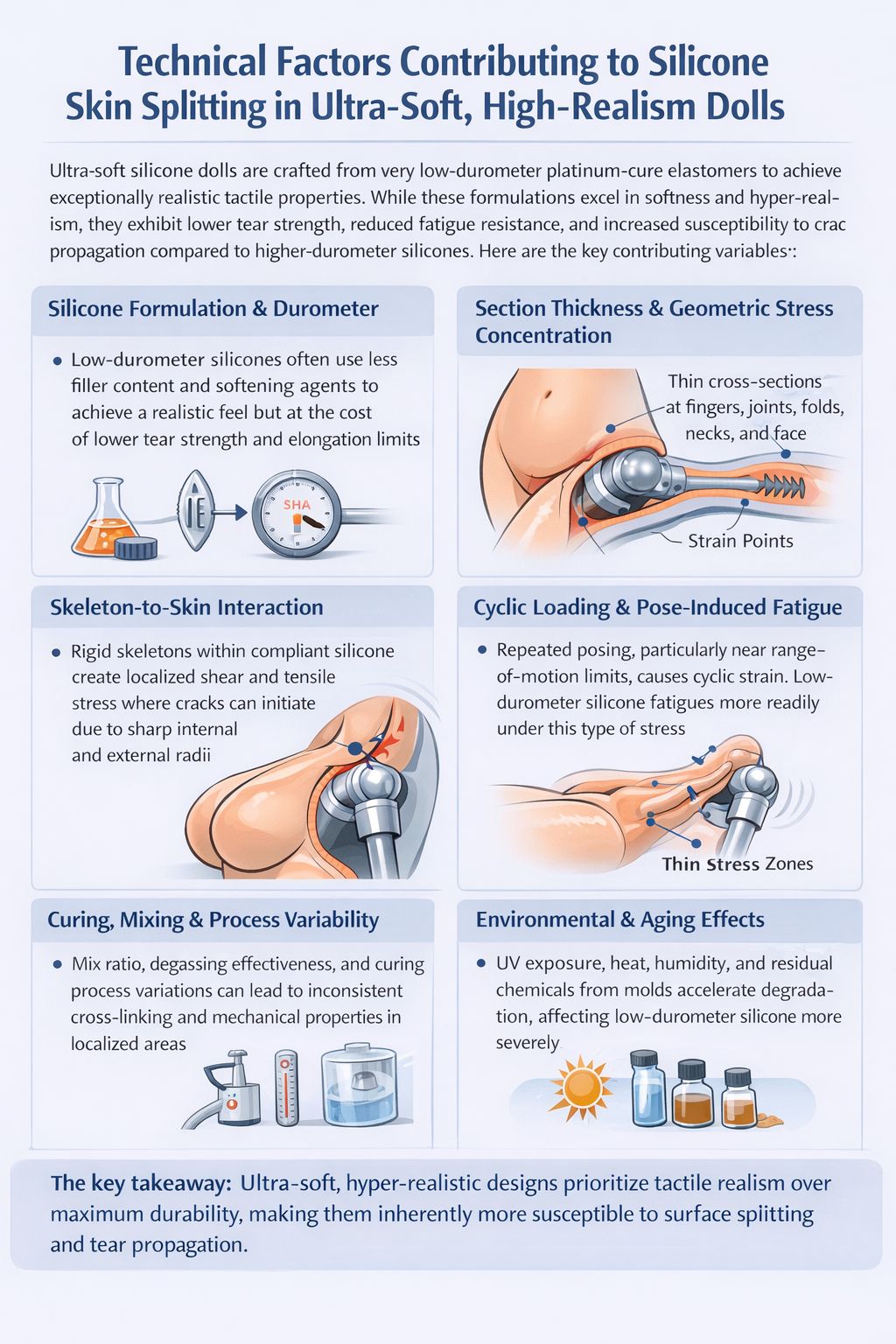
The primary material used in our highest-end dolls is ultra-soft, low-durometer, platinum-cure silicone. This silicone is specifically formulated to replicate the way human skin stretches, folds, and rebounds under touch. However, the same properties that make it exceptionally lifelike also introduce natural material limitations, one of which is silicone skin splitting.
This article explains why splitting can occur, where it is most likely to happen, and how informed care can significantly reduce risk.
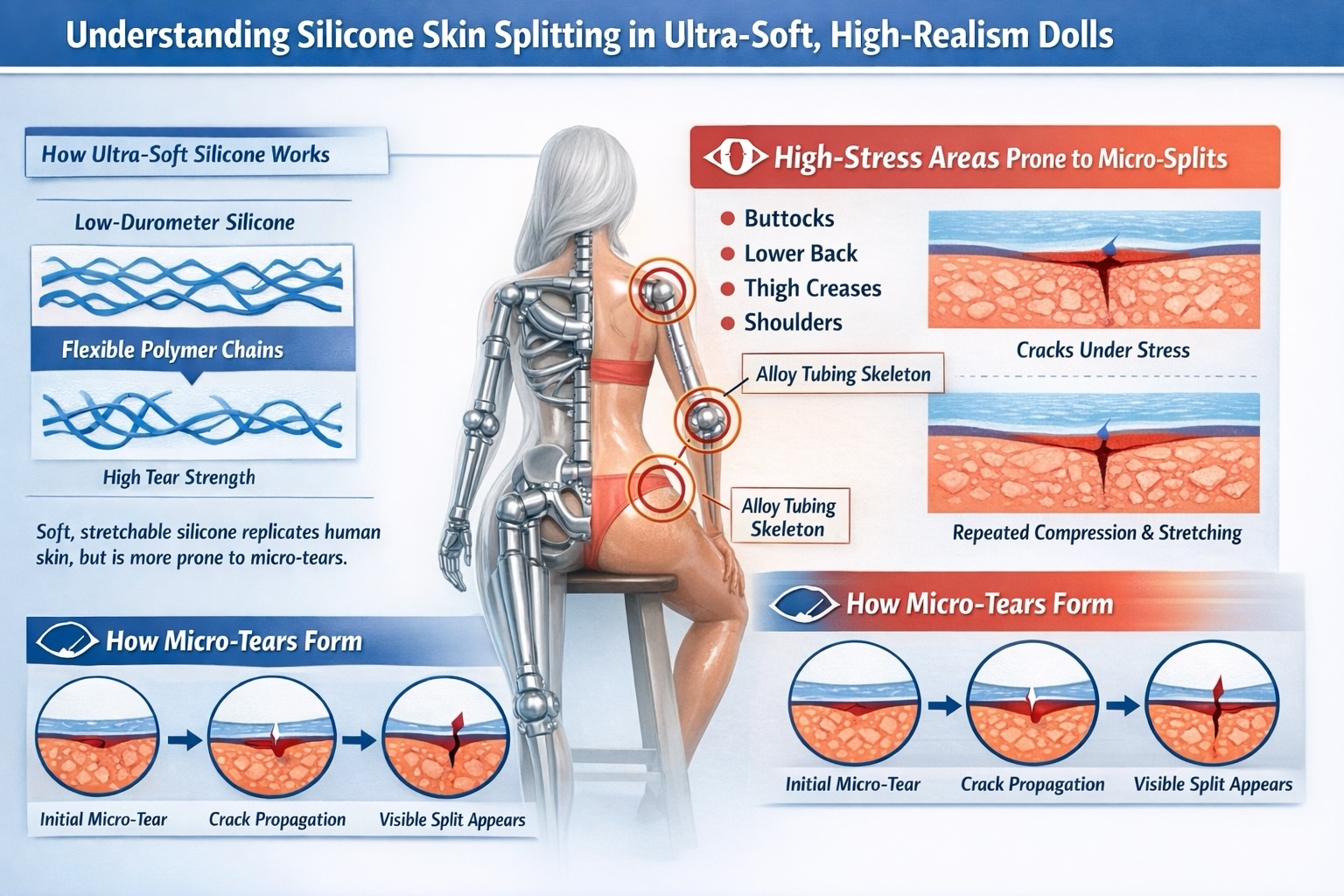
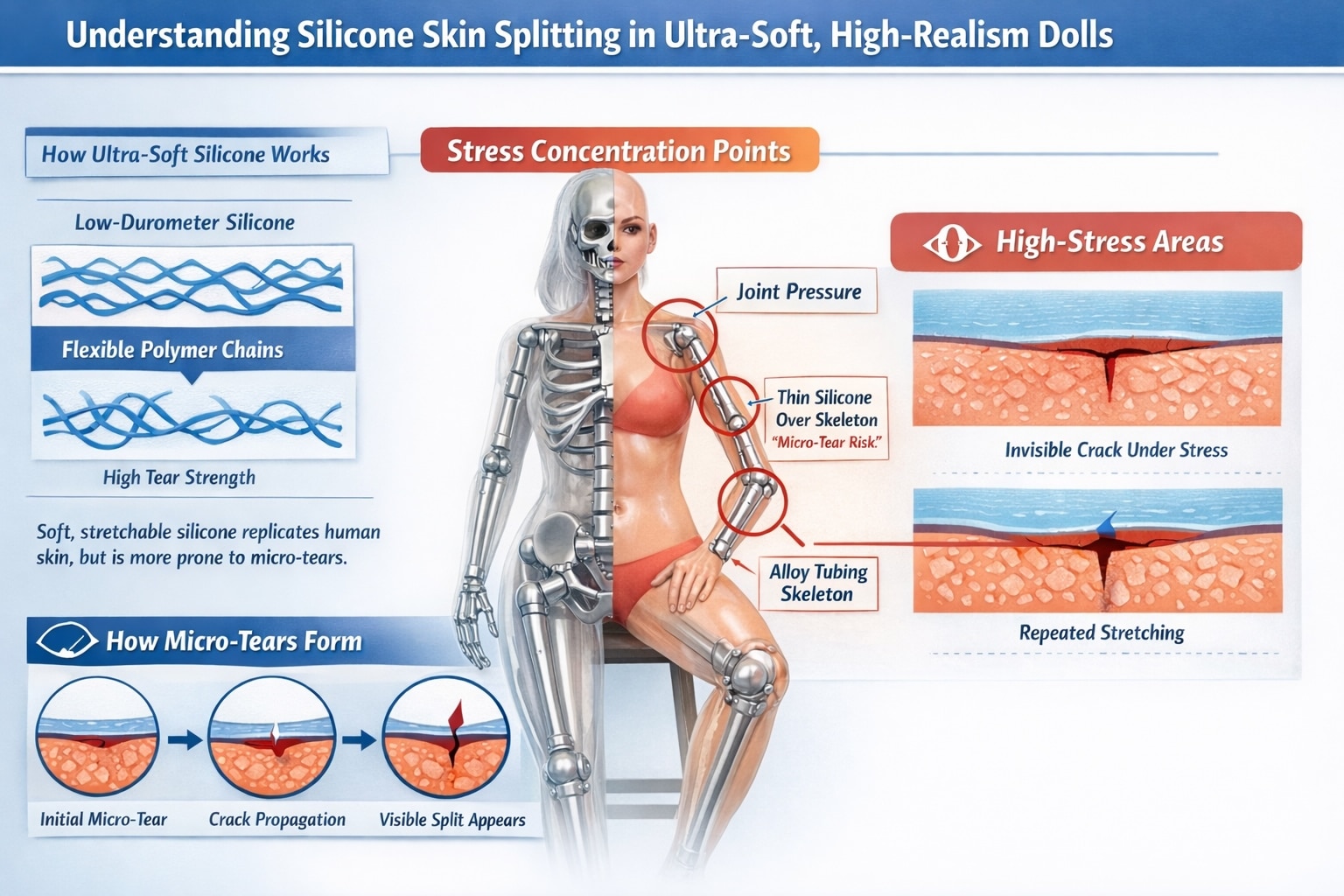
The Material Science Behind Ultra-Soft Silicone
Ultra-soft silicone is a type of elastomer, meaning it is designed to stretch and return to its original shape. In technical terms, it has a hyper-elastic polymer network: long, flexible molecular chains that deform easily under low force.
Compared to firmer silicones, low-durometer formulations:
-
Deform more easily
-
Absorb less energy before tearing
-
Have lower resistance to long-term fatigue
In practical terms, this means the silicone feels more realistic, but it is also less tolerant of repeated stress, particularly in thin or highly mobile areas.
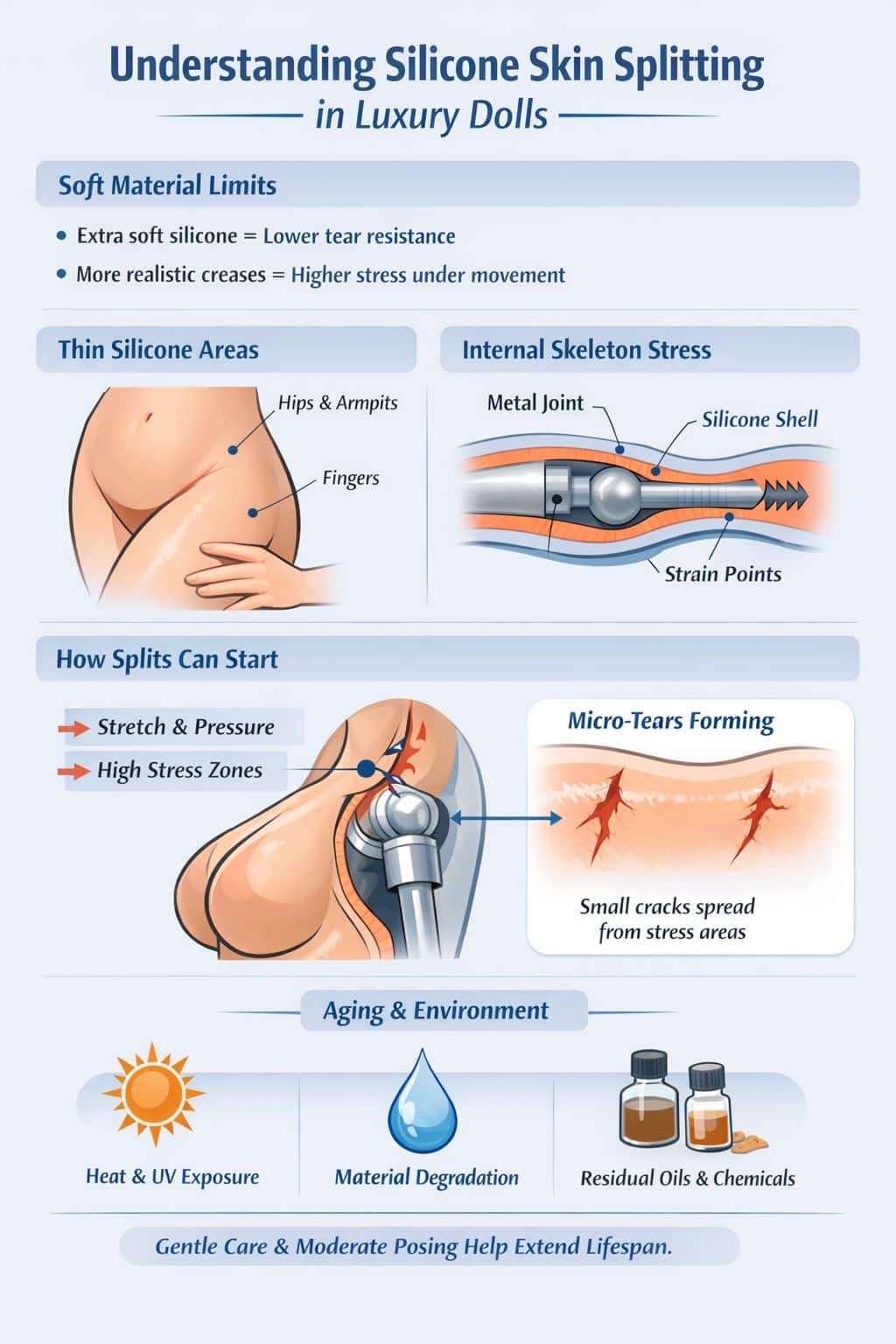
Micro-tears form when localized stress exceeds the silicone’s ability to redistribute force evenly through the polymer network. These micro-tears are usually invisible at first, developing beneath the surface before gradually propagating outward.
Stress Concentration & Internal Skeleton Interaction
All articulated dolls contain a rigid internal metal skeleton, which provides poseability and structure. Where this rigid frame meets ultra-soft silicone, stress concentration points are created.
At joints and sharp internal angles:
-
Silicone stretches tightly over metal components
-
Mechanical stress becomes localized rather than evenly distributed
-
Repeated movement concentrates force in small regions
A useful analogy is stretching a soft rubber sheet over a hard edge — the material will always fail first at the edge, not in the flat middle. Over time, these concentrated stresses can initiate micro-tears at the silicone–skeleton interface.
Thin Silicone Zones & Geometric Stress
Splitting most commonly occurs where silicone cross-sections are thin, such as:
-
Fingers and toes
-
Armpits and hips
-
Elbows, knees, and neck folds
These areas experience both high movement and reduced material thickness, increasing mechanical strain. Natural sculpted creases, while visually realistic, further amplify stress during stretching and compression.
Cyclic Loading & Fatigue
Another key factor is cyclic loading, which refers to repeated movement over time. Even gentle, everyday repositioning introduces small amounts of stress into the silicone.
Examples include:
-
Frequently bending the same joint
-
Leaving limbs in extended or compressed positions
-
Repeated pressure on the same area
While each individual movement may seem insignificant, stress accumulates microscopically. Over time, this mechanical fatigue weakens the polymer network, allowing micro-tears to develop and grow.
Environmental & Aging Effects
Silicone durability is also influenced by external conditions:
-
Heat and UV exposure can accelerate polymer degradation
-
Residual oils, lubricants, or cleaning agents may affect surface integrity
-
Humidity and storage conditions influence long-term elasticity
Additionally, minor variations during manufacturing — such as mixing ratios, degassing efficiency, or curing conditions — can result in localized differences in tear resistance. These are not visible defects but can become initiation points under stress.
How Silicone Splitting Typically Develops
Silicone splitting is almost never sudden. It usually follows a predictable progression:
-
Localized stress is applied to a thin or high-movement area
-
Sub-surface micro-tears form
-
Repeated stress causes gradual crack propagation
-
A visible surface split eventually appears
This explains why early inspection and gentle handling are so effective at preventing more serious damage.
The Key Takeaway
Ultra-soft, high-realism dolls are engineered to prioritise tactile realism and natural movement, not maximum industrial durability. This is a deliberate design choice — not a flaw.
Understanding concepts like:
-
Stress concentration
-
Material fatigue
-
Crack propagation
Allows owners to handle and pose their dolls in ways that preserve both appearance and longevity.
With informed care, moderate posing, and attention to high-stress zones, ultra-soft silicone dolls can deliver a long-lasting, lifelike experience that reflects the advanced engineering behind their design.
At Cloud Climax, we believe transparency and education are essential parts of a premium ownership experience.